Google to shut down Gtalk today, will force users to switch to Hangouts

tarting today, users will have to move away from Google Talk and embrace Hangouts, whether they like it or not. Yes, Google is all set to force users to switch to Hangouts, as it seems to be the future for the search giant.
This isn’t surprising as Google had already made it clear as Gtalk was unavailable for download from Google. Last year, GTalk was suddenly replaced with Hangouts and most people started finding it very confusing. Users looking to download Gtalk were redirected to Google Hangouts download page.
However, this week, Google has made it quite clear that GTalk will no longer be operational starting Feb 16.Moreover, looks like, Google wants to bind the desktop version to Chrome, forcing users to move to Chrome.Could WhatsApp churning out a web client be the reason for this?
Most users are accustomed to the familiar Gtalk interface, which is also believed to load better than Google Hangout on slow internet connections.
Though Google tried to bring everything – phone calls, sms, messaging and video conferencing – in one place, it hasn’t worked. Hangouts isn’t as popular as WhatsApp, WeChat or some other messaging apps.

Samsung is still on top in India, Micromax and Intex follow: Counterpoint survey

A new report from Counterpoint Research has said that Samsung is still the number one Indian smartphone manufacturer, followed by Micromax and Intex. The numbers stand  in complete contrast to an earlier Canalys report, which stated that Micromax had over taken Samsung to be India’s leading smartphone manufacturer. Samsung has already dissed the Canalys report, saying it is still the leading smartphone brand in India with a 34 percent market share.
The Canalys report said that Micromax accounted for 22 percent of smartphone sales in India in the October-December quarter, ahead of Samsung’s 20 percent. It also said that Karbonn and Lava were in the third and fourth spot respectively.
The Counterpoint Research numbers are completely different from Canalys’ report. According to them, Samsung leads India’s smartphone market with a 27.4 percent market share, Micromax is nearly 7.9 percentage points behind at 19.4. Intex is number three according to the survey with a 6.5 percent share, followed by Lava with 5.1 percent and Lenovo at number 5, thanks to the Motorola acquisition. The data for is Q4, 2014 from October to December.
The survey said that smartphone shipments stood close to 22 Million during Q4 2014 in India, which is a close to Canalys’ number of 21.6 million shipments.
According to the survey, Samsung led the overall mobile phone and smartphone market during the quarter with a market share of 16.1 percent and 27.4 percent respectively. Intex entered the top 5 smartphone vendor rankings for the first time in a quarter, notes the report.
Also Motorola cross 3 million shipments in 2014, while Xiaomi smartphone shipments grew almost 250 percent quarter-on-quarter, says Counterpoint. Interestingly the report also comments on Apple’ iPhone shipment, a number rarely mentioned in any mobile report in India. According to the numbers, Apple saw shipments in India touch half a million units for the first time in a quarter with strong demand for iPhone 6 and 6 Plus.
The latest numbers from Counterpoint prove that there’s something very wrong when it comes to research on mobile phones in India. Research firm IDC, which is also a well-sought source for numbers on mobile tracking hasn’t yet released Q4, 2014 data for India’s smartphone market, so for now a major report is still missing.  For now the contradictions in the Canalys and Counterpoint research report are too big to be ignored and need to be taken with a pinch of salt.

YouTube is testing a new multi-angle feature for videos

Videos on YouTube are going to get even more vigorous thanks to a new feature which the company is testing out. YouTube has began experimenting a way to allow users to upload multiple camera angles for their videos. Viewers can then choose between various viewing angles as they like. This of course, means a lot more production work for film-makers.
As of now, the feature is only available for desktop versions and can be tested only in the US. For starters, the company has released a live performance of artist Madilyn Bailey and is open to take various other requests who would like to help out experiment the feature.
youtube_3
youtube_2
youtube_1
The new feature works in a way where a few thumbnails appear on the right side of the video and disappear once it’s started. Viewers can try out whichever camera angle they prefer. When we tried out the feature, it worked out fine. No lag was experienced and the video quality wasn’t affected either. The video was not available in Full HD though and can only support 720p for now.
This feature will be widely appreciated while watching concerts online or even sports as it enhances the viewing experience. In conversation with Mashable, a YouTube spokesperson Matt McLernon said that, “We want to give artists as many ways to connect with their fans as possible, and this experimental feature brings fans even further into creating the experience they want.”
In an effort to make changes, YouTube had updated their app with material design and search filters last year. YouTube’s version 6.0 has added different menu colors along with a more soft and easy effect. The menu bar slides from the left. Colors are lighter and are aesthetically pleasing. It complements then newly received Android Lollipop update.
YouTube had also announced offline-video viewing feature for mobile phone users in India. This will let mobile phone users take a video offline, using either Wi-fi or data plan and this video will be available for unlimited viewing for the next 48 hours.

Xiaomi phones to be made in India

Speculations over Xiaomi manufacturing phones in India are once again heating up. According to a report in Digitimes, Chinese OEM Inventec is planning to set up production lines at a leased factory in Chennai. The plant is likely to be Nokia's idle plant in Chennai.


Though Inventenc refused to disclose the devices it will manufacture at the Chennai plant, the report said "the production lines are likely to roll out smartphones and other devices for China-based Xiaomi Technology initially, according to industry watchers."

The production is likely to begin at the end of the second or beginning of the third quarter of 2015.

Chinese handset maker Xiaomi also recently announced plans to set up a research and development unit in Bangalore, its first such facility outside of its home country.

"We have always stated that India is one of our most important markets. We are in process of signing the lease on a facility in Bangalore, which will be our R&D unit. This is the first one outside China," Xiaomi India head Manu Jain said.

Work on the facility is expected to commence by the end of March and in the next few months, it will be operational, Jain added.

Besides, Xiaomi is also looking at bringing in its own e-commerce website into the country to sell its products here.
India is one of the largest markets for Xiaomi outside of China.
Founded in 2010 by serial entrepreneur Lei Jun, Xiaomi is often referred to as the 'Apple of China' and featured in Boston Consulting Group's top 50 most innovative companies in the world list last year.

Now, turn your eyeglasses into sunglasses at your command

Washington: If you are fed up of carrying spectacles and sunglasses separately, or are annoyed at your transitional lenses glasses, which change with light, here's some good news!
Imagine eyeglasses that can go quickly from clear to shaded and back again when you want them to, rather than passively in response to changes in light.
In the study, led by Anna Osterholm in John Reynolds' group at the Georgia Institute of Technology, the researchers point out that most transitional lenses now in the market don't meet many users' needs. When wearers are driving or wearing a baseball cap, for example, the lenses stay clear rather than switching to a darker shade even in broad daylight.
Also, the majority of available versions don't block out the harshest light, such as bright light reflected off snow. And the change from colour to clear can take several minutes, which has safety implications for certain users including airline pilots. Reynolds' team wanted to find a way to solve these issues.
The researchers have now designed a new kind of lens that can switch within seconds from clear to darkly shaded and back again in response to a small electrical charge that a wearer could control. They can also fine-tune the colour of the lenses to match the full range of hues used in commercial sunglasses. To make the lenses, they say they used a method that could be easily scaled up for manufacturing.
The findings are reported in the journal ACS Applied Materials and Interfaces.

Microsoft invests in rogure Android start-up Cyanogen

Microsoft is investing in a hot start-up that’s trying to weaken Google's hold over Android.
People familiar with the matter say Microsoft is putting money into Cyanogen, which is building a version of the Android mobile-operating system outside of Google’s auspices.
Microsoft would be a minority investor in a roughly $US70 million round of equity financing that values Cyanogen in the high hundreds of millions, one of the people said. The person said the financing round could grow with other strategic investors that have expressed interest in Cyanogen because they’re also eager to diminish Google’s control over Android. The identity of the other potential investors couldn’t be learned.
Spokespeople for Microsoft and Cyanogen declined to comment.
The investment would be unusual, because Microsoft offers its own Windows Phone mobile operating system. But Windows Phone has only about three per cent market share, which may be prompting Microsoft to consider unconventional steps.
Android was intended as an “open source” operating system that hardware makers can deploy in their devices for free. Yet Google has frustrated manufacturers in recent years by requiring them to feature Google apps and set Google search as the default for users, in exchange for access to the search engine, YouTube, or the millions of apps in its Play Store.
Such restrictions make it harder for apps that compete with Google’s to win distribution on Android devices. For Microsoft, that means less exposure for its Bing search engine, which is up against Google search. It also could limit growth of other Microsoft software products.
Cyanogen offers an alternate version of the Android mobile operating system free of such restrictions. The 80-person company claims to have a volunteer army of 9,000 software developers working on its own version of Android.
“We’re going to take Android away from Google,” said Kirt McMaster, Cyanogen’s chief executive, in a brief interview last week. The next day, at an industry event sponsored by tech news service The Information, McMaster said Cyanogen had raised $US100 million to date. Previously the company had disclosed that it raised $US30 million of funding. The company spokeswoman declined to make McMaster available for this story.
McMaster said more than 50 million people use a version of the Cyanogen Android operating system, most of whom have installed it in place of their phone’s initial operating system.
To spread adoption more quickly, Cyanogen is working on deals with hardware makers to install the software on their devices. It recently signed a deal with Indian smartphone maker Micromax to ship handsets with Cyanogen’s software and is close to announcing more such deals, say people familiar with the matter.
A third mobile ecosystem as an alternative to rivals Google and Apple could help Microsoft better distribute its apps and services on smartphones.
“Cyanogen may have a greater chance than Microsoft to build a third ecosystem for mobile,” says Rajeev Chand, managing director at Rutberg & Co., an investment bank focused on the mobile industry.
Independent versions of the Android operating system are already popular, particularly in China where Google has struggled to enter the market. In total, these other versions represented 37 per cent of Android shipments world-wide in the third quarter, according to Strategy Analytics.
Smartphone makers and wireless carriers are looking for a standard bearer to offset Google’s growing market power, Chand says.
Prior investors in Cyanogen included Benchmark Capital, Redpoint Ventures, Andreessen Horowitz and Chinese social-networking giant Tencent. New venture capital investors are expected to join the strategic corporate investors in this latest round of funding.

Xiaomi’s Mi 3 has started receiving MIUI 6 OS update; Redmi Note and Redmi 1S to follow up in March

Xiaomi’s Mi 3 has started receiving MIUI 6 OS update; Redmi Note and Redmi 1S to follow up in March
Xiaomi Mi3 during our review of the smartphone.
0
By tech2 News Staff /  30 Jan 2015 , 14:55
At the launch of Xiaomi’s flagship smartphone – Mi4, the company confirmed that other Xiaomi smartphones would receive the MIUI 6 update based on Android OS in India. The Mi 4 smartphone already comes with MIUI 6.
The Redmi 1S and Redmi Note 3G will get the update by March where as the Redmi Note 4G will get the update by early February. Xiomi Mi 3 is now receiving the MIUI 6 update in India.
MI 3 users will receive an OTA (over-the-air) update for the new OS, but if you can’t wait that long to try it out, you can download it from Xiaomi’s forum. Xiaomi claims to have made MIUI 6 less distracting and there’s definitely a big change when you compare the existing MIUI5 to the upcoming version.
Key features of the MIUI 6 include Motion, Colour Content, Customisation and Security. It will also introduce animation to some apps like Clock, Weather, and Device unlock, etc.
The new features in the dialler
The upgrade also allows floating notifications, which have been seen in the past. This means that if you get a call you don’t have to leave an app to answer it. There’s also a division of Notifications on the basis of those that are important and unimportant, which users can customise according to their preference.
Users can also choose what notifications that they would like to see in the Locked Screen mode and deny apps specific permissions by going into Permissions Manager.
Mail app looks very much like the iOS app
A lot of the skeuomorphic or real-world design elements have been toned down, which is evident in the clock, and calculator app, both of which sport a much cleaner look now. Similarly the camera app has been toned down, with the big target buttons replaced by clearer targets that float on the screen.
It does add a great deal of cleanliness to the camera UI, which earlier had broad bands on top and bottom with the icons.
Recently, Xiaomi had a flash sale for the Mi3 on Republic Day. Only a limited number of units were be available and that too on a first-come-first-serve basis. There was no information provided as to many devices were sold and how fast they sold. This is unusual, considering that the company has always gained huge publicity with the fact that their devices have been selling out in a matter of seconds.

CyanogenMod CEO blasts Google over unfair control, hints at own app store

CyanogenMod’s CEO Kirt McMaster has blasted Google over its control of Android and hinted that the company wants to move away from a Google-centric version of Android by launching its own app store.
According to Android Authority in a discussion at an event for The Information (paywall) in San Francisco, McMaster said, “We’re attempting to take Android away from Google.”
He went on to point out that they want to make a more open version of Android, one that is currently not possible with Google.
Android Authority quotes him as saying,
“We’re making a version of Android that is more open so we can integrate with more partners so their servicers can be tier one services, so startups working on [artificial intelligence] or other problems don’t get stuck having you have to launch a stupid little application that inevitably gets acquired by Google or Apple. These companies can thrive on non-Google Android.”
He added that while today Cyanogen is dependent on Google, it might not be tomorrow. “We will not be based on some derivative of Google in three to five years,” he said.
Kirt McMaster also said that Cyanogen would have its own app store in 18 months, an area where Google has exercised tight control. Other than Amazon’s own App Store, Google Play Store is much the only legitimate way to apps on your Android device.
As far as Cyanogen is concerned, it’s relationship with Google isn’t the only one under turmoil. We had noted earlier how in an interview to Android Central CyanogenMod’s founder Steve Kondik said that they are currently “stuck in the middle of a fight between OnePlus and Micromax because they are supplying the OS to both companies.”
Kodnik also told Android Central while OnePlus is a startup just like them, but it’s not likely that the “long-term visions” of the two companies will converge, hinting that they are likely to part ways in the future.
He went on to confirm that OnePlus would get Lollipop update this month though he cautioned, “I have no idea what the future holds beyond that.”
As far as CyanogenMod is concerned, it is currently available in India with the Micromax Yu Yureka smartphone and the OnePlus device. If and when CyanogenMod decided to break away from the Google App store model, it remains to be seen how its popularity will be affected.

Republic Day Special: Xiaomi MI3 available on Flipkart

Xiaomi fans have something to rejoice, as the company announced that their highly popular ‘Mi3’ will go on sale exclusively via Flipkart on January 26, 2015.
As per reports, only limited number of units will be available for sale, and the shopping platform will serve the customers on a ‘first come first serve’ manner.
xiaomi mi3 flipkart Republic Day Special: Xiaomi MI3 available on Flipkart
As per notification on Xiaomi’s commercial page, registrations for Xiaomi Mi 3 will begin at 12:00 PM and close at 2:00 PM on Monday, January 26, 2015.
Lucky users will get the device added to their cart by the end of the day. The Chinese company is conducting this sale as a part of Republic Day Celebrations in India. 
‘Xiaomi Mi 3’ features a 5 inch full HD display with a resolution of 1920*1080 pixels. The smartphone is equipped with an IPS LCD Display, and it has a pixel density of 441 ppi.
This Chinese phone is powered with a 2.3GHz Qualcomm 800 Snapdragon quad-core processor, and it runs on Android v4.3 Jelly Bean operating system.
‘Xiaomi Mi 3’ offers a RAM of 2GB. The internal storage capacity of this phone is 16 GB. The mobile phone has a 13 MP rear and 2 MP front facing cameras.
The presence of 3050 mAh battery in this smartphone is expected to give a standby mode of 500 hours, and 50 hours of music playback

Microsoft Office 2016 desktop suite coming later this year

Microsoft made some big announcements earlier this week at the Windows 10 event, but there wasn’t much talk about its productivity suite.
At the Windows 10 preview, it spoke about the lightweight versions of Word, Excel, PowerPoint, Outlook, and OneNote on tablets and phones running Windows 10. They will also be available to download from the Windows Store for other Windows 10 devices. “But they’re really just lightweight versions of the familiar core Office applications and they won’t have all of the functionality of the traditional desktop versions, points out The Register.


In a blog post, the company later announced that it is also working on full Office suite. Following the usual nomenclature, it will be called Office 2016.
The blog post, written by Julia White, General Manager for the Office Product Management team, says, “We are hard at work on the next release of the Office desktop suite that will be called Office 2016. (Unexpected, I know!) We will have more to share on Office 2016 in the coming months, but this suite will remain the comprehensive Office experience you’re long familiar with, best suited for a PC with keyboard and mouse. We have compelling new experiences coming as part of this Office suite–stay tuned to the Office Blog for more details. We expect to make Office 2016 generally available in the second half of 2015.”
So, she hasn’t really disclosed how it will be different from the previous iteration. However, she does hint that it will be “best suited for a PC with keyboard and mouse.”
There is no word on the pricing for Office 2016. On asking, the company didn’t disclose the price if a user downloads them from the Windows Store, or if the Office 365 subscription would be required for full document editing experience, according to the report by The Register.
“A Microsoft spokesperson did say, however, that commercial and consumer Office 365 subscribers would be able to upgrade to the new Mac version at no additional cost, and that a perpetual-license version of Office for Mac would be available in the same timeframe,” adds the report.
Though there is no word on the exact launch, the new suite is expected to be available in the second half of 2015

Twitter’s new password killer called Digits launched for web

Twitter recently announced the kind of password killer you’re going to love and it’s called Digits, a secure platform that was introduced late last year. All you need to do is cling to your mobile phone at all times, a habit you’ve surely formed as thoroughly as inhaling and exhaling.
Digits has been available for Android and iOS apps since it was launched at the Twitter Flight mobile developers’ conference in San Francisco back in October 2014. The roll-out was aimed for 216 nations across the world, in 28 languages. What it means is that you hopefully won’t need to remember usernames and passwords in the future.
twitter-digits
You know how a lot of websites and applications let you sign in with your Facebook details? Well, you won’t require a Twitter account in order to enjoy the benefits of Digits which is a standalone platform that’s part of the company’s Fabric toolkit for developers aiming to make improvements to their apps and/or monetize them too.
Two-factor authentication is the idea behind Digits, and even this new web extension. Basically, you log into any app using your phone number and then the confirmation code sent to it. Since these codes are not static and change each time you sign into an application, they are secure and relieve you from the pain of having to think up a password.

Digits for web lets developers attach their application to its companion site and allow people to log in with the same mobile number they use for the concerned app. What’s more, if you sign into such a portal on your PC, any other website embedding this cool little Twitter platform and tied to a tool you have open on your handset, will not require login again.
Twitter hasn’t revealed any plans to monetize Digits as yet, though it’s earnest in convincing developers to leverage it in order to increase their online audience engagement.

I Bet you haven't seen a better tech than this.. ‪#‎Microsoft‬ always a step ahead


Microsoft’s Cortana voice assistant comes to the PC with Windows 10

 As Microsoft continues to blur the lines between its mobile, tablet and desktop devices, the company today announced its Cortana virtual assistant is coming to its PC version of Windows 10. It was first introduced with Windows Phone 8.1.
Windows 10 0121 122 730x410 Microsofts Cortana voice assistant comes to the PC with Windows 10
Cortana’s logo will appear in the taskbar to simplify access for desktop users. Like a mashup of Google Now and Siri, she’s able to provide intelligent contextual suggestions for things like restaurants or movies while responding to your queries with a personality as well.
Of course, she can perform your standard voice commands, like running a Bing search or playing your music. Microsoft even showed the virtual assistant predicting results for this year’s Superbowl, and the company says the assistant will become smarter with every use.
One advantage over other virtual assistants is what Microsoft calls the ‘Notebook’, which shows what custom information Cortana has stored on you. You can delete or customize this information to make Cortana’s suggestions more intelligent.
Of course, Cortana will be available on Windows 10 for mobile devices as well. The assistant works across platforms, so you will be able to look up directions on your PC and then pull them up on your mobile device, for instance.
Cortana will also be available in Microsoft’s new Project Spartan Browser, providing intelligent suggestions as you type search terms. In one example, Cortana provided flight information as a user simply typed an airline’s URL.

WhatsApp finally launches on the Web

 It seems the day many people have been waiting for is finally here – WhatsApp is now available on your desktop, but only if you’re an Android, Windows Phone or BlackBerry user.
The new Web client is actually a simple mirror from the WhatsApp app on your phone, so in order to use it, you’ll need to have an active connection on your phone, not just your computer.
whatsappweb 730x264 WhatsApp finally launches on the Web
To start, you’ll need to scan a QR code and have the latest version of WhatsApp installed on your phone. You’ll also need to be using the Chrome browser on the desktop.
WhatsApp founder Jan Koum said that due to “Apple platform limitations”, there’s no iOS version on the way for now.

Dropbox for Windows Phone has arrived

Not only has the long-awaited WhatsApp Web app launched, but today also brings the introduction of the much-anticipated Dropbox for Windows Phones and tablets.
Dropbox Windows Phone 220x408 Dropbox for Windows Phone has arrivedAnnounced in a blog post, the new apps offer access to the core Dropbox features you’d hope to see, like automatic photo backups, your favorite files (accessible online or offline), and multi-account support for people who have a separate work and personal account to maintain on a single device.
For the phone version, you can also pin any specific Dropbox folder to your Start screen for swift access.
Microsoft said that Windows Phone 8.0 and 8.1 (and Windows tablet) users will be able to download the app from today.
➤ Dropbox [Windows Phone]

Microsoft finally delivers the Windows we really wanted

Over the last few years, Microsoft seems to have been flailing. Windows 8, while a step in the right direction for the company, was an utter mess and saw slow adoption along with poor developer uptake.
Windows 8 went too far, too fast; it was a user experience disaster. As users bemoaned Windows 8’s confusing interface, experts labeled it a “cognitive burden.” Funny videos of people unable to use the OS surfaced. Others complained they didn’t know where the start menu had gone.
But, while Microsoft was out preaching the good word to developers and trying to win them over to its new “modern” interface platform, the company failed to deliver any meaningful apps that showcased why developers should build their apps for it.
Microsoft stuck to its guns that Windows 8 was better for over a year before admitting that maybe it had gone too far and eventually relented with a compromise: a start button.
Windows 8.1 was the beginning of Microsoft’s slow undoing of all the extremities it had implemented in Windows 8 and the company attempting to win consumers back. It started listening again.
Even though Microsoft had put the platform in front of developers for over a year now, adoption was still slow and the company still failed to deliver flagship apps that showed off the power of the modern interface. Even Microsoft Office (and still is) was conspicuously absent.
Windows 10, announced today, is the culmination of Microsoft’s efforts to make Windows something consumers can actually love and enjoy using again. The company is throwing everything it’s got into making Windows something desirable.
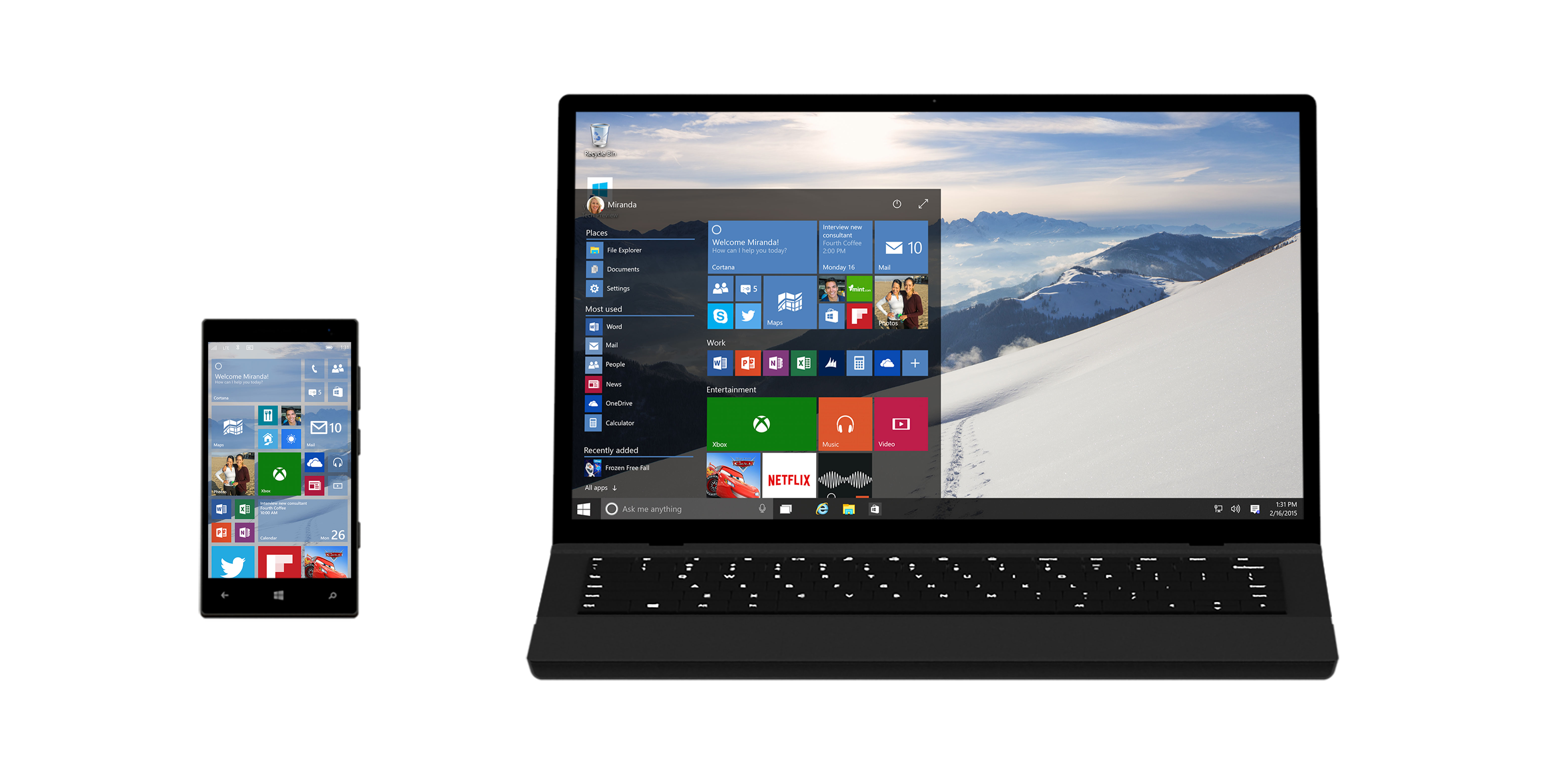
Phone Laptop 730x365 Microsoft finally delivers the Windows we really wanted
The first thing Microsoft did with Windows 10 is put the start menu right back in.After it being absent for three years now, it’s finally home and it’s long overdue (it’s lovely to see transparency has returned to Windows, too).
The new start menu is better than ever before, combining the best of the modern interface with the old-school start menu, which should help get consumers using the new interface while still feeling comfortable.
That full-screen experience from Windows 8 is still around, but Microsoft has added in some smarts that actually makes it better. Now if you’re on a device that can be used as a tablet or laptop, your computer will detect which way you’re using it and adjust the interface best for your experience.
Microsoft has also started realizing that some baggage can’t be shed. A new internet browser included in Windows 10 — dubbed “Spartan” for now — is an attempt to make a sort of Chrome competitor. It’s got a new look, a special intelligent reading mode and features the company’s Google Now competitor Cortana that will predict what you want to see.
Windows 10 0121 330 730x410 Microsoft finally delivers the Windows we really wanted
Spartan is a fast, smart new browser that looks great and ditches Internet Explorer’s brand baggage, which might actually help win some browser market share back for the company.
Cortana, Microsoft’s virtual assistant, is now integrated right into the desktop. She’s able to offer suggestions, search the internet, create reminders and a whole lot more. Microsoft actually beat Apple to the punch on this one; Siri isn’t even on the Mac yet, despite the company’s huge lead to get it there.
Windows 10 0121 104 730x410 Microsoft finally delivers the Windows we really wanted
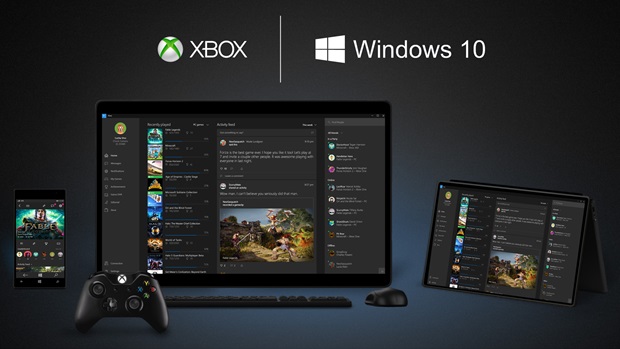
Microsoft also unveiled a number of flagship new features to get people excited;the Xbox One will stream games directly to your PC, mobile apps work the same on the desktop and mobile, a unified notification center and more.
HERO 0114 OutWindows tv19 011815 Microsoft finally delivers the Windows we really wanted
But it didn’t end there: Windows 10 will be free for all users running Windows 7, 8, 8.1 and Windows Phone 8.1, provided they upgrade their OS within a year of release. This move is an incredible one, reaching further back than any other release.
Microsoft thinks it can win people over with Windows 10, so getting these people upgraded in the first year will be a huge feat. The company promises that those who upgrade will get updates to the latest version of Windows for free, for the lifetime of the device.
The biggest thing we don’t know, is if Windows 10 will be a subscription service or not. At the event, it was touted that “Windows is now a service” which implies you might pay a yearly fee, but Microsoft said during the Q&A that its business model isn’t changing at this point.
It’s my opinion that Windows should be made free, but it’s unlikely Microsoft will do that in the short term. Stay tuned, however, to see if the company drops the one-off software cost in favor of a yearly subscription instead.
The event today felt like the company finally had all its eggs in one basket. Everything finally looks like it’ll work together, not as disparate silos of products that happen to be from the same company.
With today’s announcement, Microsoft has even solved its developer problem. Now, developers can write one app that’ll work on every Windows tablet, phone and desktop.
Those apps will be in front of users in a familiar way, thanks to the new start menu, and will be far less confusing than previously.
phone start 730x730 Microsoft finally delivers the Windows we really wanted
Microsoft now has a single software platform and set of applications, which instead of competing for resources will work together. Now, Microsoft’s platform will either thrive together, or die together.
Of course, this actually requires developers to build the platform, which has been a slow, painful process so far. However, having unified the software should not only improve the app availability and quality problem on Windows, it should significantly improve it on Windows Phone too.
All of this is exciting on its own, but Microsoft had more up it’s sleeve; it’s build a wearable that allows you to see holograms overlaid in the real world. It’s called HoloLens, and it’s the kind of thing I could never have imagined Microsoft dreaming up.
Microsoft HoloLens Family Room RGB1 730x487 Microsoft finally delivers the Windows we really wanted
I’m not sure whether HoloLens is something anyone actually wants, but it is super cool and incredibly futuristic. It’s a look where computing might go next.
Microsoft is an innovative company again; its vision for computing on desktop and mobile finally makes sense. Its bought all of it’s major products together again in one move and it feels like the company is finally home.
Satya Nadella said at the end of his presentation today that “we want to move from people needing Windows, to choosing Windows, to loving Windows.” It feels like the company might actually be able to pull that off now.

CES 2015: The charger that boosts battery in seconds

A Samsung smartphone has just been recharged from being nearly out-of-juice to full capacity in less time than it takes to boil a kettle.
The Israeli start-up behind the demo, Storedot, has shown off a similar feat before.
But a previous demo posted online eight months ago involved a battery many times thicker than the handset itself as well as an outsized charger - making the tech impractical for real-world use.
This time round the phone involved is no bigger than normal, and the charging dock is pretty slim-line as well.
Demo of mobile phone charging in under 30 secondsThe demo was first shown in October at Storedot's Tel Aviv headquarters
There's a couple of trade-offs involved, but being able to recharge devices about 100 times faster than at present has the potential to revolutionise the way we use mobile phones, tablets, laptops and wearable tech.
Storedot's ambitions, however, are even larger.
Organic batteries
The BBC is the first to have been shown the new kit, apart from tech industry executives who had to sign non-disclosure agreements.
It's not something that can be retrofitted to existing devices, since most phones would be fried by the 40 amps of electricity the current version of the charger supplies.
It also involves using a completely new type of battery, which contains specially synthesised organic molecules.
"We have reactions in the battery that are non-traditional reactions that allow us to charge very fast, moving ions from an anode to a cathode at a speed that was not possible before we had these materials," explains Doron Myersdorf, the company's chief executive.
Storedot's chief executive Doron MyersdorfStoredot aims to recharge a typical smartphone battery in less than a minute by 2017
He adds that phone-makers from the US, South Korea, China and Japan have already begun talks to either license or buy exclusive rights to the tech, and that he has 17 meetings at this year's Consumer Electronics Show (CES) in Las Vegas with "all the major" players.
But Mr Myersdorf also acknowledges that there is still more work to be done before his tech is ready for consumers.
Storedot has a 2017 goal of matching the energy density - the amount of energy stored per kilogram - of its own batteries and the lithium-ion ones commonly found in existing handsets.
The firm's prototypes currently deliver about a third of that rate, meaning the normal-sized handset used in the demo only held 900mAh of juice, and would have to be recharged several times a day were it deployed now albeit only taking two minutes to do so each time.
The company also showed off a 2,000mAh battery, which took three minutes to recharge, but the phone that housed it had been made 5mm (0.2in) thicker than normal to accommodate its girth.
By the 2017 deadline, Storedot also aims to halve its current charging times.
Abramovich backing
At this point it's probably wise to offer a caveat.
The tests involved the BBC being shown a graphical readout to prove the batteries were being recharged as fast as suggested.
This would be relatively easy to fake, and Mr Myersdorf acknowledges that his scientific claims have yet to be peer reviewed.
But his credentials and those of his chief technology officer, Prof Simon Litsyn, check out. Both held key roles at Sandisk, which they helped make a leader in flash memory tech.
Storedot chargerStoredot says it aims to further reduce the size of its charger
Furthermore, their firm has already raised $48.5m (£32.1m) of funds, $10m of which came from Russian tycoon Roman Abramovich's private asset management company. The BBC understands Samsung is among the other investors.
Even so, one industry-watcher remains wary.
"Battery technology is the single biggest challenge holding back the consumer electronics industry right now," says Ben Wood from the CCS Insight consultancy.
"Any claim to a major breakthrough should always treated with scepticism because it's been promised so many times before and we still don't have a solution.
"But if what this company is claiming to offer comes to pass, it would have a huge impact, as the amount of battery-hungry connected devices people use in their daily lives is rising exponentially."
'Game-changer'
Certainly, CES itself is packed with firms offering a plethora of portable batteries to help users make it through the day, everything from lip-stick sized chargers for emergency top-ups to a $500 (£300) backpack that can power up several gadgets at once.
Were we able to recharge smartphones in less than a minute, the need to buy such external batteries would decrease - and we might even become more willing to use processor-intensive apps and games, as well as adopt smartwatches and other wearable tech.
But Storedot has a bigger plan.
"We are just starting to work on electric vehicles," says Mr Myersdorf.
"And we intend to show in one year a model of a car that can charge in three minutes.
"We are 100% sure we can deliver, because the knowhow of how you take one cell and combine thousands of them together has already been done by Tesla.
"The user-experience would be exactly like refuelling, but without fumes.
"It would really boost adoption of electric vehicles. It would be a game-changer."